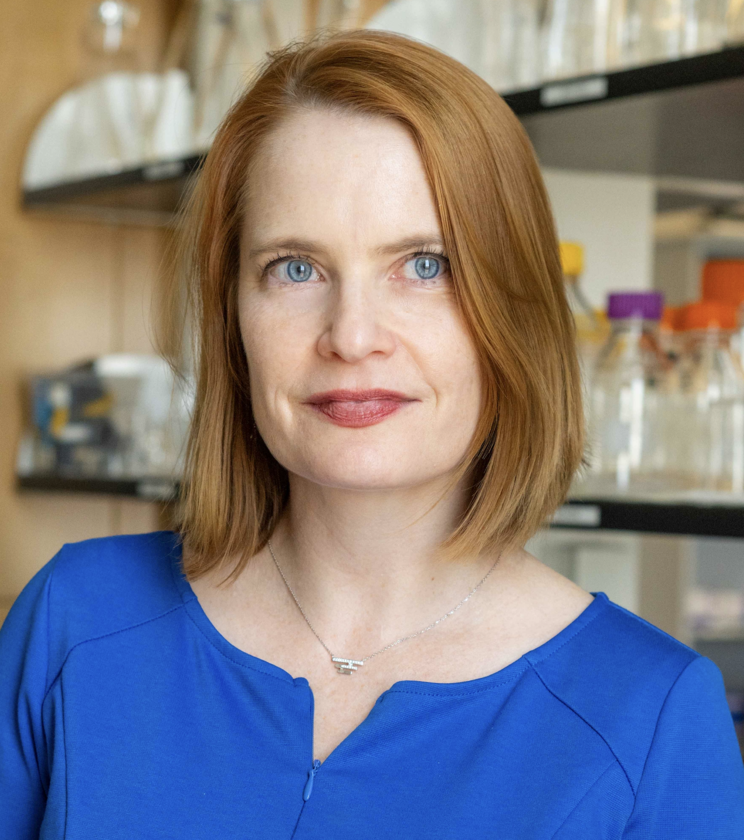
Debra Bangasser, Ph.D.
Neuroscience
Georgia State University
Recruited: 2022
Debra Bangasser’s research focuses on the biology behind conditions such as depression, PTSD, substance-use disorders and Alzheimer’s disease. Key to this research has been exploring the differences between how men and women experience and process stress. Until recently, scientists tended to treat male and female brains as essentially the same when studying stress-related disorders. Bangasser's work has revealed important biological differences that may help explain why certain psychiatric disorders occur at different rates in women and men.
A major focus of her research has been a naturally occurring hormone known as CRF (corticotropin-releasing factor), which is secreted during the body’s response to stress. In a 2010 paper, Bangasser, along with her mentor Rita Valentino and their colleagues, reported that female brains respond differently to CRF than male brains, particularly in brain regions involved in alertness. The reason: In male rats, receptors involved in CRF signaling moved inside cells, thus “turning down” the signaling, but the same didn’t happen in female rats.
The findings suggested that an important brain region that controls alertness in females might be more sensitive to stress and have a harder time "restarting" or adapting after a stressful event. This meant that the increased vulnerability of women to certain stress-related psychiatric disorders could be rooted in molecular biology.
Six years later, Bangasser and colleagues elaborated on their earlier findings. Using genetically modified mice that had chronically high levels of the CRF hormone, they found that CRF receptors signal through different pathways in males and females, and some of the pathways in females were linked to Alzheimer’s disease. Remarkably, they then learned that in mouse models for Alzheimer’s, high levels of CRF increased the formation of amyloid beta plaque – but only in the females. This work suggests that sex differences in stress responses may be a factor that contributes to higher rates of Alzheimer’s disease in women than men.
Bangasser’s findings have helped contribute to a larger movement in neuroscience and biomedical research: the recognition that researchers should study both males and females rather than assuming results from one group automatically apply to the other. In addition to improving understanding of mental illness, her work revealed mechanisms that could become new targets for treating a range of brain-related disorders.
As a GRA Distinguished Investigator at Georgia State University, Bangasser directs the Center for Behavioral Neuroscience (CBN), which explores the neurobiology of social behavior, memory, cognition and other areas. The CBN was established in 1999 with funding from National Science Foundation and from GRA to conduct collaborative research, training and community outreach. It has since pioneered new approaches to team science by developing research “collaboratories” that investigate how social factors can shape the structure and function of the brain.
More recently, Bangasser has been investigating factors early in life that contribute to brain development and, later on, mental illness and behaviors like substance abuse.
One project involves examining how changes in the environment early in life affect astrocytes, a type of brain cell that controls the chemical glutamate. Larger astrocytes may do a better job of removing this chemical, restoring some balance to brain signaling; and if so, behaviors like addiction could be reduced. Another project centers on newborns who may experience pain while in intensive care. Bangasser and colleagues are working to determine whether stress from that neonatal experience is linked to the risk of substance abuse after childhood.
Prior to joining Georgia State in 2022, Bangasser conducted neuroscience research at Temple University. While there, she received a five-year “Pathway to Independence” grant from NIH and the prestigious five-year CAREER Award from NSF. In addition to leading CBN at Georgia State, she is part of the university’s Neuroscience Institute, which explores the development, structure and function of the nervous system.
In 2024, the American College of Neuropsychopharmacology — the field’s leading research society — bestowed its highest honor on Bangasser: the 2024 Daniel H. Efron Research Award. Two of the past winners were institute directors within NIH.