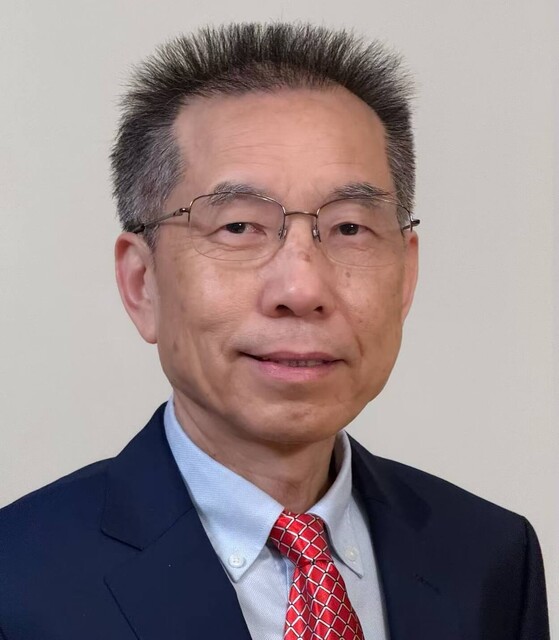
Liang Qiao, M.D.
Vaccines and Immunotherapeutics
Georgia State University
Recruited: 2026
The human body is built to defend itself against all kinds of infection and disease. Liang Qiao has dedicated his work to bolstering this defense by exploring creative approaches to developing vaccines and therapeutics. His discoveries are largely foundational – new platforms for others to build on – but Qiao has also emphasized translating findings into effective treatments.
Qiao came to Georgia State in 2026 after a highly distinguished 30-year career at Loyola University Chicago. One landmark contribution was identifying a new target for slowing the harmful effects of inflammation. It’s a protein channel called TRPM2, which functions as a kind of gate on the surface of cells. Qiao’s team discovered that the gate opens to allow a flood of calcium ions to enter, triggering a sensor (inflammasome) that induces inflammation. This discovery brought a potential new drug target for controlling inflammation. His team described the process and presented findings in a 2013 paper in Nature Communications, which researchers have since cited nearly 400 times in their work.
Another key contribution of Qiao’s came a few years later, when he identified a new way of getting the body’s built-in immune system to fight cancer. Typical approaches to cancer immunotherapy focus on boosting the adaptive immune system – activating antibodies and specialized T-cells to spot and kill tumor cells. Qiao tried something new. He gave mice with intestinal tumors oral doses of pseudoviruses, which essentially are harmless virus-like particles (VLPs) containing DNA. The VLPs and DNA ignited a defense process inside tumors that destroyed them (and Qiao procured a patent for this pseudovirus delivery approach).
In a 2017 paper, Qiao and colleagues reported that mice treated with this approach lived three times longer than those not treated. Importantly, the research demonstrated the potential of pseudoviruses (PsVs) as drug couriers inside the body – they’re resilient to the digestive system after being swallowed as a pill and effective in delivering DNA into cells and prompting the immune system to fight. Scientists have since refined Qiao’s cancer-fighting approach and are exploring its potential for treating human patients.
In 2021, Qiao tried an altogether different vaccine approach to fight health threats – arguably, the most important work of his career.
Traditional vaccines elicit antibodies. Sometimes, however, the antibodies end up helping the virus infect more cells, such as with the mosquito-borne threats Zika virus and Dengue virus. That effect is called ADE (antibody-dependent enhancement), and it’s challenging to overcome when developing new vaccines.
Qiao and his collaborator, Lanying Du (GSU), demonstrated a vaccine that could induce killer T-cells in the body to fight viruses with very little antibody response; hence, no ADE effect to cause collateral damage. Aiming at Zika virus, he and colleagues homed in on a protein (NS3) that the virus needs to survive. They created a vaccine that instructs cells to create NS3 so that it breaks down immediately – an effect that marshaled T cells to spot and destroy cells with bits of the essential protein.
Qiao’s 2021 paper on the research shared the good news that the vaccine fully protected the mice from Zika infection, generating protection from T cells instead of antibodies. The vaccine provided the added benefit of preventing fetal damage in pregnant mice – an enormously encouraging development, as Zika virus can cause severe birth defects like microcephaly. In 2026, a patent for the vaccine approach was awarded to the team.
With his arrival to Georgia State, Qiao was at work applying the same strategy to prevent both Zika infection and Dengue fever. Their NIH-funded project allows them to test different versions of the vaccine and assess their durability, but without bringing on the destruction of ADE.
He also brought two other NIH-funded vaccine projects, both of which built on his earlier success with pseudoviruses prompting the body’s innate immune fighters. One centers on safeguarding future variants of coronaviruses by targeting proteins in the virus that don’t change as much as the spike proteins. The other seeks to protect against HIV by creating CD8+ T cells without activating CD4+ T cells (which HIV uses to infect the body).
Both of these, as with several of Qiao’s previous vaccines, are mucosal vaccines, a hallmark of his work. By definition, these begin the fight against infection not in the blood, but at exposed mucosal surfaces, like nose, lungs and gut. Mucosal vaccines typically trigger antibodies on these surfaces; by contrast, Qiao’s mucosal vaccines emphasize activating killer T-cells (cytotoxic T lymphocytes) to battle antigens alongside antibodies – or in some cases, instead of them.
Mucosal vaccines bring several advantages – mucosal infections are among the most common causes of illness worldwide, and they don’t involve injections – but developing them is a complicated undertaking. Qiao’s focus on them underscores the significance of his accomplishments.
Overall, Liang Qiao’s long-term research program aims to generate scalable, cost-effective, and biologically precise interventions that address major unmet medical needs.
Research
Next-Generation Vaccine Development
- Safe and effective vaccines against Dengue and Zika viruses
- Vaccines targeting future pandemic coronaviruses
- Cytotoxic T Lymphocyte-based vaccines targeting HIV
- Vaccines to prevent Clostridioides difficile infection
- Computational models to predict vaccine immunogenicity and efficacy
Anti-inflammatory Therapeutic Development
- Probiotic-derived anti-inflammatory metabolite therapeutics for inflammatory diseases (bacteria-induced sepsis, alcohol-induced liver disease, dry eye disease)
Choosing Georgia
Georgia State University has a strongly collaborative and supportive research environment, as well as a driving interest in moving therapeutics forward to improve the lives of people. And the Georgia Research Alliance is a valuable ally and asset for helping to move vaccines toward the clinic, which is one of my goals.