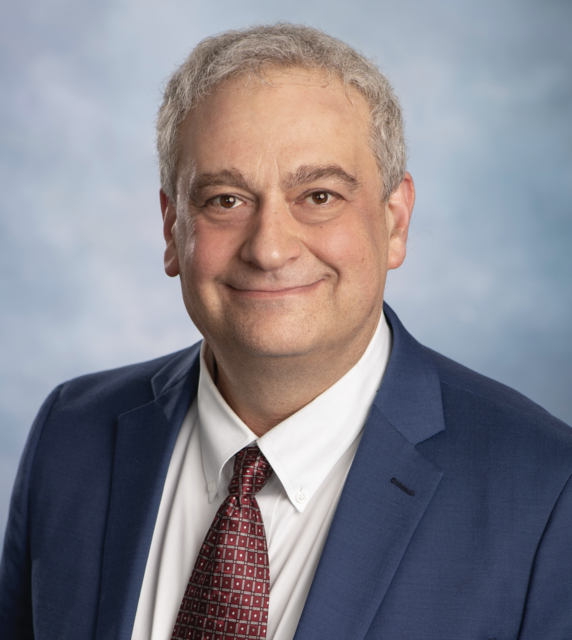
Charles Noussair, Ph.D.
Experimental Economics
Georgia State University
Recruited: 2026
Charles Noussair builds markets, bargaining games and small economies inside a laboratory — with real money at stake — to see what people actually do and which theories can explain their decisions. His experiments have reshaped how economists account for price bubbles, cooperation and punishment; attitudes toward risk; the pull of emotion on financial decisions; and how better information changes congested systems like traffic.
Standard economic models assume people are rational and selfish, but Noussair’s results reveal where these assumptions break down in some specific interactions.
He directs the Experimental Economics Center at Georgia State, arriving in 2026 from the University of Arizona, where he ran the university’s Economic Science Laboratory.
Research
- Upended the standard explanation for why price bubbles form. Economists had blamed bubbles on speculation, where traders pay more than an asset is worth because they expect to resell it later for a higher price. Noussair built laboratory markets where resale was impossible. Prices still rose above what the asset was worth, then collapsed.
- Clarified drivers of cooperation in group settings. Noussair and colleagues found that both social disapproval and financial penalties (fines) boost group members’ contributions to an effort. Although the fines increased participants’ contributions, social disapproval involving no money was also very effective, especially when people interacted in the same groups over time. The findings highlight that social pressure can be a powerful force influencing economic decisions and cooperation.
- Extended the measurement of risk attitudes beyond risk aversion. Economists typically measure how much risk people avoid. Noussair measured two additional traits: prudence, the urge to build a cushion against future risk, and temperance, the reluctance to stack risks. Those in his experiments who were more prudent saved more and got into less debt in real life; the more temperate chose safer investments.
- Established anger as an observable signal of costly choices. Many economic models treat feelings as noise. Noussair showed anger is readable in advance, and observers could unconsciously use how angry someone looked to predict who would turn down money to punish an unfair offer.
OUTSIDE THE LAB
In a 2025 study, Noussair investigated how people learn about their retirement options to improve their choice of retirement plans. The study was carried out in association with Chile's pension regulator, the Superintendencia de Pensiones, and the country's National Social Security Organization, the Instituto de Previsión Social. Staff of both bodies were co-authors on the published study.
SELECT HONORS
- President, Economic Science Association, the global society of researchers in experimental economics (2023–2025)
- Co-Editor-in-Chief, Experimental Economics, the leading journal for the experimental economics field (2014–2019)
- President, Society for Experimental Finance, the society of researchers who use experimental methods in finance (2014–2015)
Choosing Georgia
“Georgia has a distinguished tradition in experimental economics represented by the ExCEN research center at GSU. Being here is a great opportunity to continue my research and begin new projects.”