April 16, 2026
The Relentless Ralph Tripp
A tribute to the late GRA Eminent Scholar
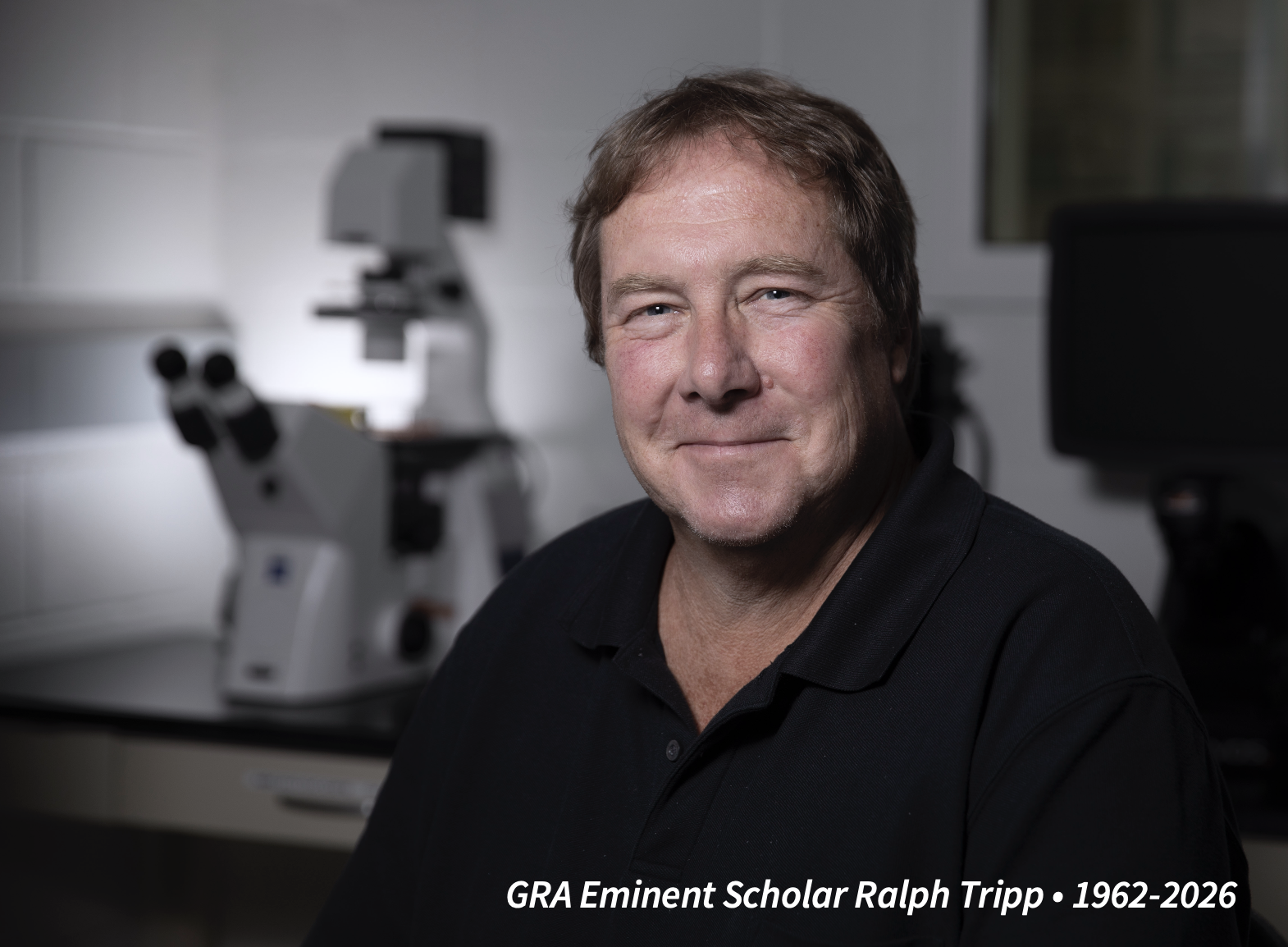
Last month, the world sadly lost Ralph Tripp, a GRA Eminent Scholar at the University of Georgia. Ralph was a true force of discovery and innovation in the field of viral immunology. His H-index, a metric of how often his published work was cited by other researchers, was a phenomenal 83. Peers had great respect for him — two years ago, he was elected a senior member of the National Academy of Inventors. He personified the practice of team science; colleagues on research projects were just as likely to work in industry or government as at a university.
Ralph helped shift antiviral science from simply “fighting the virus” to inhibiting the ways viruses manipulate the human body. His big-picture work led to new strategies for preventing and treating all kinds of viral infections.
The most prominent of these strategies targeted the human cell pathways that viruses depend on to replicate themselves. Block that path, and you can slow or stop virus reproduction. This is now a major strategy in antiviral drug development, and Ralph Tripp was key to this shift.
A drug to treat gout, probenecid, was a focal point of Ralph’s recent work. In a 2022 paper, he and UGA colleague David Martin showed that the drug inhibited replication of viruses in human cells and animal models. The finding again demonstrated the potential of targeting the proteins and pathways in cells that viruses need to reproduce. Beyond fighting infection, the strategy held promise for slowing the mutation of viruses and preventing drug resistance. And Ralph and David did it with a drug that had already been deemed safe and made available.
GRA and UGA recruited Ralph in 2004 as an Eminent Scholar. Beyond helping to fund an endowed chair, GRA invested in ultra-sophisticated equipment in the university’s Animal Health Research Center to support Ralph’s research. Ultimately, Ralph would secure tens of millions in external funding from private and public sources (not state dollars).
Our own celebration of Ralph centers on his relentlessness. He embodied the persistence of the best scientists — never satisfied with the latest finding, willing to take just about any path to quash the respiratory viruses that threatened human and animal health.
“His persistence didn’t stop with exploration,” says GRA President Tim Denning. “Ralph was fully committed to innovation and worked to ensure his research benefitted people.” He was, Denning adds, the picture of the entrepreneurial scientist, involved in the launch of seven start-up companies, most of which received early investment from GRA.
One of those is Hypercell Technologies, which makes tests that spot pathogens in the food chain, notably in livestock. In the lab, Ralph identified monoclonal antibodies — molecules produced in a lab that behave like the body’s natural antibodies — that were shown to be effective against swine flu. That discovery drew the interest of Smithfield/Murphy Brown, the nation’s largest swine producer, and the company invested in the technology. GRA then helped Ralph and others launch Hypercell in 2013; today, the company works with the largest food producers in the world.
Ralph’s legacy surpasses his numerous advances and discoveries. It includes the many young researchers he mentored and the skilled scientists he helped recruit.
They’ve now taken the baton. And Ralph Tripp’s pursuit lives on.